
Laser Hair Removal Guide for First-Timers
June 13, 2026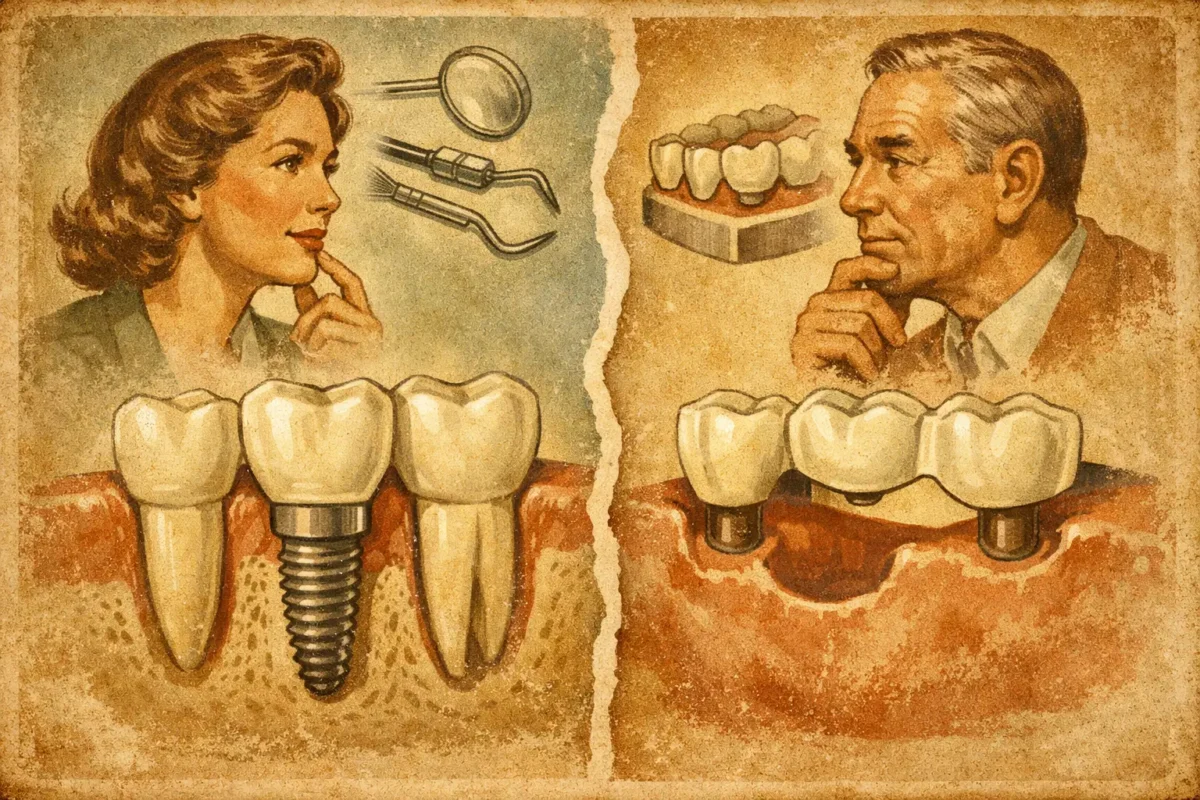
Losing a tooth changes more than your bite. It can make you think twice before smiling in photos, speaking up in meetings, or enjoying foods you used to eat without a second thought. When patients ask about dental implants vs bridges, they are usually not just comparing procedures – they are trying to figure out which option will feel the most natural, protect their smile, and fit their life long term.
Both treatments can replace a missing tooth beautifully. Both can restore function and improve appearance. But they work in very different ways, and the better choice depends on your oral health, your timeline, your budget, and what matters most to you day to day.
Dental implants vs bridges: the core difference
A dental bridge fills the gap by attaching an artificial tooth to the natural teeth on either side. Those neighboring teeth are typically shaped down and covered with crowns so they can support the bridge.
A dental implant replaces the missing tooth root with a small titanium post placed in the jawbone. Once healing is complete, a custom crown is attached on top. Instead of relying on adjacent teeth, the implant stands on its own.
That difference matters more than it may seem. A bridge is often faster, while an implant is usually more independent and better for preserving bone over time.
Which option looks and feels more natural?
In many cases, both can look excellent when planned well. A well-made bridge can blend in smoothly with your natural smile, and a carefully designed implant crown can do the same. From a cosmetic standpoint, the quality of the treatment plan, the materials used, and the skill of the dental team all make a real difference.
Where patients often notice a difference is in the feel. Because an implant is anchored in the bone, it tends to feel more like a natural tooth once fully healed. A bridge can also feel comfortable and stable, but it is still connected to neighboring teeth, so the experience is a bit different.
If your priority is a replacement that acts as independently as possible, implants often have the edge. If your priority is restoring the gap quickly with less treatment time, a bridge may feel like the more practical path.
The impact on your other teeth
This is one of the biggest decision points.
A traditional bridge usually requires healthy teeth next to the gap to be reshaped. That is not always a problem – especially if those teeth already have large fillings or need crowns anyway. In that situation, a bridge may actually make good clinical sense.
But if the neighboring teeth are healthy and untouched, some patients prefer not to alter them. An implant avoids that issue because it does not depend on support from adjacent teeth.
There is another long-term factor to consider. After a tooth is lost, the jawbone in that area can begin to shrink because it no longer has a root stimulating it. An implant can help maintain bone in that spot. A bridge does not replace the root, so it does not provide the same support to the bone beneath the missing tooth.
What about treatment time?
If speed is your top concern, bridges are often appealing. In many cases, they can be completed in a matter of weeks, depending on the complexity of the case and whether any preparatory treatment is needed.
Implants usually take longer. First, the implant is placed. Then the bone needs time to heal and fuse with it before the final crown goes on. That healing period can take several months. Some patients also need bone grafting before implant placement, which adds time but can improve the final outcome.
This does not mean implants are inconvenient for everyone. Many patients are happy to wait for a solution that may last longer and preserve oral structures better. Still, if you have an upcoming event, want a shorter treatment window, or need a replacement fast, a bridge can be a very reasonable option.
Cost now versus value over time
For many adults, cost is part of the conversation from the start, and understandably so.
A bridge often has a lower upfront cost than a dental implant. That can make it feel more accessible in the short term. Implants usually involve a higher initial investment because they include surgery, healing, and the final restoration.
But upfront price is not the whole story. Bridges may need replacement after years of wear, especially if the supporting teeth develop decay, fracture, or gum problems. Implants can also need maintenance, and no treatment lasts forever, but they are often considered the more durable long-term option when properly cared for.
So the better value depends on your situation. If you need a faster, lower-cost solution now, a bridge may be the right fit. If you are focused on longevity and preserving surrounding teeth and bone, an implant may make more sense over time.
Are dental implants or bridges easier to maintain?
Both options require good home care and regular dental visits. Neither is a treatment you can place and forget.
An implant is brushed and cleaned much like a natural tooth, although technique still matters, especially around the gumline. A bridge also needs daily cleaning, but the area underneath the artificial tooth requires extra attention. Special flossing tools or other cleaning aids are often needed to keep that space healthy.
For some patients, implant care feels more straightforward. For others, maintaining a bridge is no trouble at all once they learn the routine. The key is choosing an option you can care for consistently, not just one that sounds ideal on paper.
Who may be a better candidate for a bridge?
A bridge may be a strong option if the teeth next to the gap already need crowns, if you want a shorter treatment timeline, or if implant surgery is not suitable for your health or comfort level. It can also work well for patients who have enough support from neighboring teeth and want an effective fixed solution without a surgical procedure.
It may also be recommended when bone levels are limited and you want to avoid additional procedures such as grafting. In those cases, a bridge can restore appearance and function without extending treatment too much.
Who may be a better candidate for an implant?
An implant may be ideal if you have healthy gums, enough bone support, and want to replace a missing tooth without affecting the teeth beside it. It is often preferred by patients who want a treatment that feels more like a natural tooth and supports the jawbone over time.
Implants can be especially appealing for adults who value long-term planning. If you are thinking not just about the next year, but the next decade, that perspective may push the decision toward implants.
That said, implants are not automatically better for everyone. Smoking, uncontrolled diabetes, active gum disease, and certain medical factors can affect healing. This is why a full evaluation matters so much.
Dental implants vs bridges for front teeth and back teeth
The location of the missing tooth can influence the recommendation.
For front teeth, appearance is often the top concern. Both implants and bridges can deliver beautiful cosmetic results, but the gumline, smile line, and bone support all need careful assessment. In highly visible areas, treatment planning has to be precise.
For back teeth, biting force becomes a bigger issue. Molars and premolars handle more chewing pressure, so durability and support matter greatly. Implants are often favored here because they function independently, but bridges can also perform well when the supporting teeth are strong.
This is one reason personalized care matters. The best treatment for a missing front tooth is not always the best treatment for a missing molar.
The decision should match your smile and your lifestyle
There is no one-size-fits-all winner in the dental implants vs bridges conversation. One patient may want the most conservative option for neighboring teeth. Another may want the fastest route to restoring their smile. Someone else may be balancing budget, appearance, and long-term maintenance all at once.
The right answer comes from looking at your full picture – your oral health, bone support, gum condition, cosmetic goals, comfort with procedures, and how you want your smile to feel years from now. At a patient-centered clinic like Zyva Clinics, that conversation should feel clear, supportive, and tailored to you rather than rushed or overly technical.
A confident smile is not only about replacing what is missing. It is about choosing a solution that helps you eat comfortably, speak naturally, and feel like yourself again. If you are weighing your options, the most helpful next step is a personalized consultation with a dental team that will explain the trade-offs honestly and help you choose with confidence.