How to Prepare for Dental Implants
June 5, 2026
Are Clear Aligners Worth It for Adults?
June 9, 2026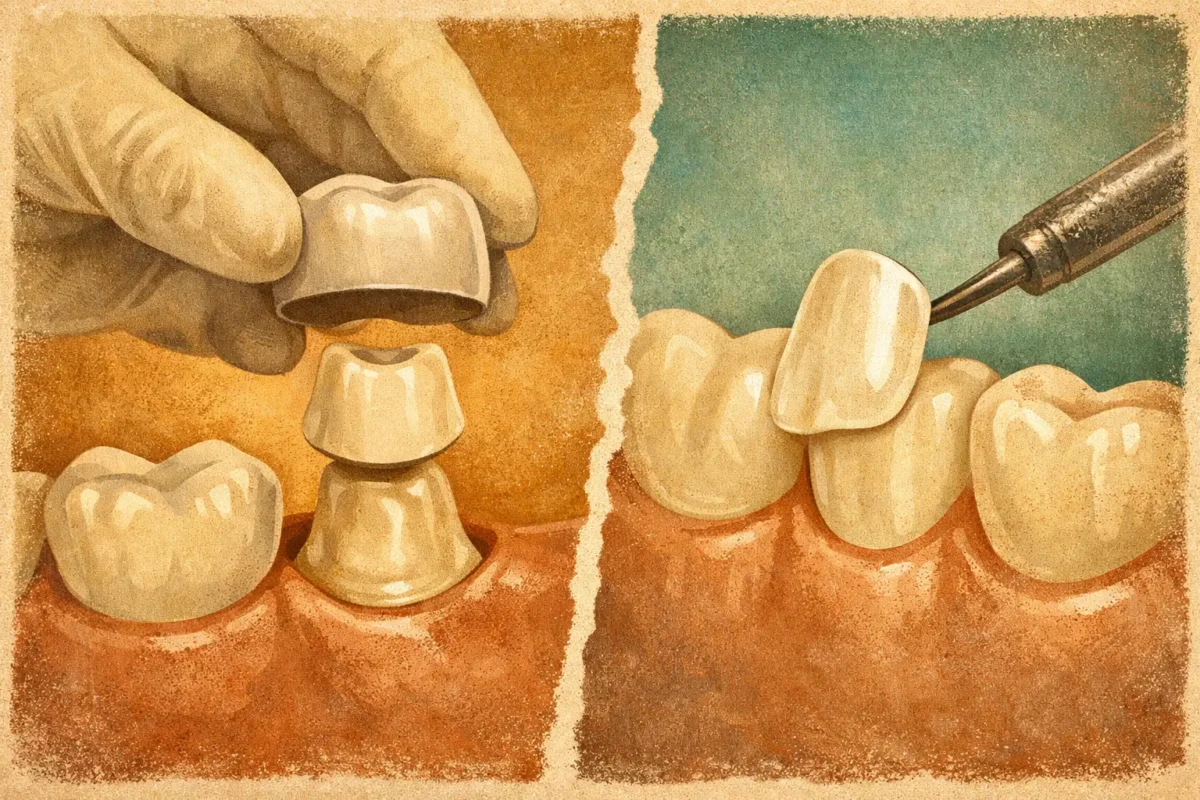
A chipped front tooth can change more than your smile. It can make you think twice before a photo, a meeting, or even a simple conversation. When patients ask about dental crowns vs veneers, they are usually not asking for a technical lecture. They want to know which option will look natural, protect their tooth, and help them feel like themselves again.
The honest answer is that both treatments can transform a smile, but they do very different jobs. Veneers are usually chosen to improve the visible front surface of a tooth. Crowns cover the entire tooth and are often recommended when a tooth needs more support. If you are deciding between the two, the best choice depends on how healthy the tooth is, how much structure remains, and what kind of result you want to maintain long term.
Dental crowns vs veneers: the core difference
Think of a veneer as a custom-made shell that bonds to the front of a tooth. It is designed mainly for cosmetic improvement. Veneers are commonly used to correct discoloration that whitening cannot fix, small chips, minor shape issues, gaps, or slightly uneven teeth.
A crown is more like a cap that covers the whole tooth above the gumline. It improves appearance too, but its main purpose is protection and strength. Crowns are often used when a tooth has a large filling, has been weakened by decay, is cracked, or has had a root canal.
That difference matters because the treatment plan should match the condition of your tooth, not just the look you want. A beautiful result is only successful if it is built on a healthy foundation.
When veneers make more sense
Veneers are often a strong choice when the tooth is structurally healthy but cosmetically disappointing. If your teeth are stained, slightly misshapen, worn at the edges, or have small gaps, veneers can create a brighter and more balanced smile without fully covering each tooth.
For many adults, this is what makes veneers appealing. They can deliver a refined cosmetic change while preserving more natural tooth structure than a crown in the right case. They are especially popular for the front teeth because they can be crafted to match skin tone, facial features, and the overall character of your smile rather than looking flat or overly white.
That said, veneers are not ideal for every patient. If a tooth is badly broken, heavily filled, or weakened, a veneer may not provide enough support. Patients who grind or clench their teeth may also need careful evaluation because excessive force can shorten the life of veneers if the bite is not properly managed.
What veneers are best at
Veneers are excellent for cosmetic refinement. They can improve color, contour, and symmetry in a very noticeable way, yet still look natural when designed well. If your main concern is how your teeth look rather than how much structural repair they need, veneers may be the more conservative and elegant option.
When crowns are the better option
Crowns are usually recommended when a tooth needs reinforcement, not just a cosmetic upgrade. If a tooth is cracked, has lost a large amount of enamel, has extensive decay, or can no longer safely hold a filling, a crown can restore both function and appearance.
This is why crowns are often seen as the more protective treatment. They wrap around the tooth and help it handle normal biting forces more safely. For back teeth, where chewing pressure is much higher, crowns are frequently the more dependable solution. For front teeth, they are used when there is simply not enough healthy structure left for a veneer to be predictable.
A crown can also be the right answer after root canal treatment. Once a tooth has been treated internally, it may become more brittle over time. Covering it with a crown can reduce the risk of fracture and help preserve it for years.
What crowns are best at
Crowns are best when strength matters as much as appearance. They are often the right choice for teeth that need full coverage and long-term protection. If your tooth has already been through significant damage or treatment, a crown may offer peace of mind that a veneer cannot.
Appearance, feel, and natural results
Patients often worry that crowns will look bulky or that veneers will look too perfect. In reality, the final result depends less on the name of the treatment and more on planning, materials, and the skill of the dental team.
Modern porcelain crowns and veneers can both look beautifully natural. The shape, translucency, surface texture, and shade all matter. A good result should complement your face and smile, not announce itself the moment you walk into a room.
Veneers are often favored for high-end cosmetic smile design because they can create a very polished front-tooth appearance. Crowns can also look excellent, but they are sometimes chosen for more restorative reasons. If a front tooth has major damage, a crown may still provide the most natural-looking result simply because it is the treatment that gives the tooth proper support.
Tooth preparation and how much gets removed
One of the biggest differences in dental crowns vs veneers is how much of the tooth is typically prepared. Veneers usually require less reshaping because they cover only the front surface and edge in selected cases. Crowns generally require more reduction because they need room to fit over the entire tooth.
This is one reason dentists do not place crowns on healthy teeth just for the sake of cosmetics when a veneer would do the job well. Preserving natural tooth structure is always a priority. At the same time, being too conservative on a tooth that really needs full coverage can lead to a weaker result. Good dentistry is about choosing what is appropriate, not what sounds simpler.
Durability, maintenance, and everyday life
Both crowns and veneers can last many years with good care. Longevity depends on oral hygiene, bite forces, diet, habits like nail biting or ice chewing, and regular dental visits.
Veneers are durable, but they are not indestructible. They work best when placed on suitable teeth and protected from excessive stress. Crowns are generally better equipped for teeth under heavier functional load, especially when the tooth underneath is compromised.
Neither option is a free pass to ignore maintenance. You still need to brush, floss, and keep up with exams and cleanings. If you grind your teeth at night, a custom night guard may be recommended to protect your investment. This matters whether you choose a veneer or a crown.
Cost and value over time
Cost is often part of the decision, and understandably so. Pricing varies based on material, the number of teeth treated, how complex the case is, and whether additional care is needed first. Veneers may seem like the cosmetic option and crowns the restorative option, but the financial picture is not always that simple.
The better question is not just which costs less today. It is which treatment gives you the healthiest, most stable result for your tooth. A veneer placed on a tooth that truly needs a crown can fail sooner and lead to more treatment later. A crown placed on a tooth that could have been treated conservatively may involve more intervention than necessary.
That is why personalized planning matters. The right treatment should support both your smile goals and your long-term oral health.
How to choose between dental crowns vs veneers
If you are comparing dental crowns vs veneers, start with three practical questions. Is the tooth healthy enough for a cosmetic-only solution? How much strength does it need? And what kind of result matters most to you – subtle enhancement, full restoration, or a combination of both?
A consultation should include more than a quick glance at your teeth. Your dentist should evaluate the tooth structure, bite, gum health, habits like clenching, and the overall balance of your smile. In a modern clinic setting, this kind of planning helps patients feel confident because the recommendation is based on both appearance and function.
For patients who care about aesthetics and self-care as part of a bigger confidence routine, this decision often feels personal. That is why a supportive, customized approach matters. At Zyva Clinics, smile treatments are planned with comfort, safety, and natural-looking results in mind, so patients can feel informed rather than pressured.
The best cosmetic dentistry does not push everyone toward the same answer. Sometimes a veneer is the right finishing touch. Sometimes a crown is the treatment that protects your tooth and restores your confidence at the same time. The right choice is the one that respects your natural tooth, fits your lifestyle, and helps you smile without second-guessing it.