
Teeth Whitening and Polishing Difference
April 27, 2026
Does Teeth Polishing Whiten Teeth?
April 29, 2026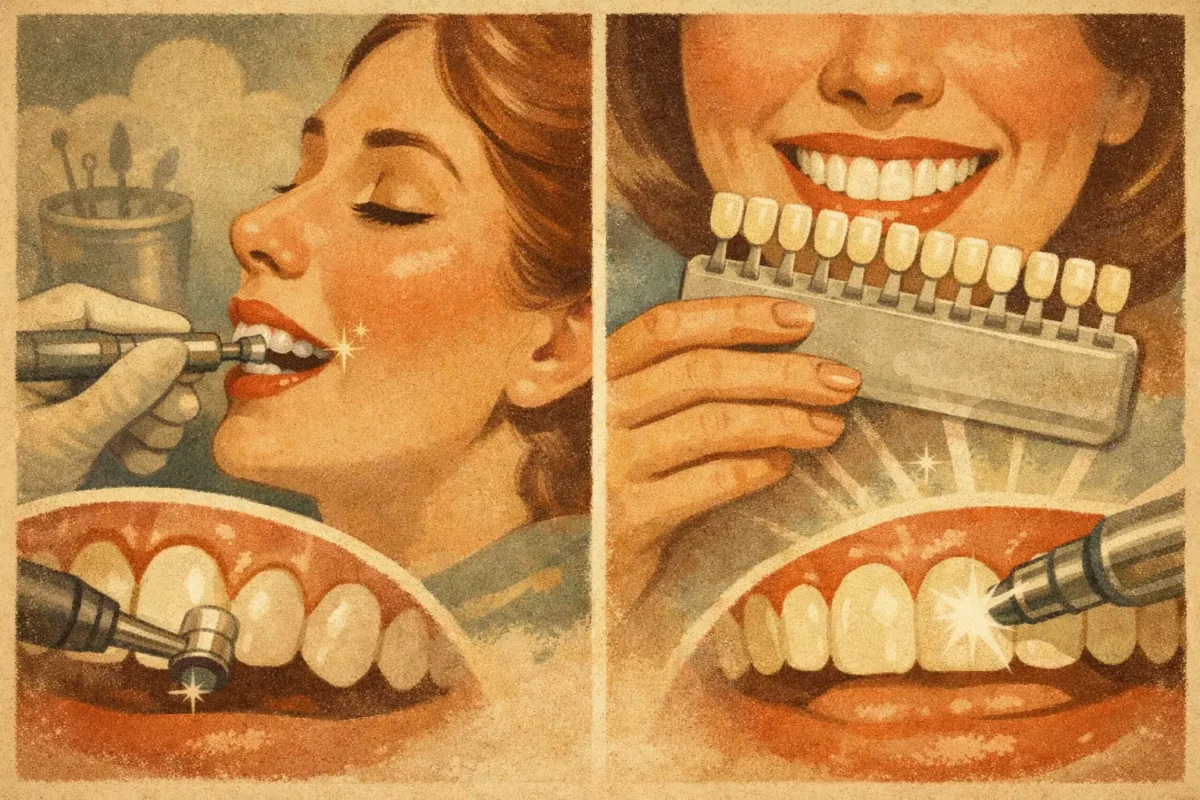
You notice your teeth looking a little dull before a meeting, a wedding, or even just a photo-heavy weekend, and the question comes up fast: is teeth polishing the same as whitening? They can both make your smile look cleaner and brighter, but they are not the same treatment, and choosing the right one depends on what is actually causing the change in color.
That difference matters more than most people realize. If surface buildup is making teeth look yellow, polishing may help right away. If the shade change comes from deeper staining inside the tooth, whitening is usually the better option. Knowing which is which can save time, set better expectations, and lead to results that actually match what you want to see in the mirror.
Is teeth polishing the same as whitening?
No. Teeth polishing and teeth whitening are two different dental treatments with different goals.
Teeth polishing is mainly designed to remove plaque, soft deposits, and surface stains from the outside of the teeth. It is often done during or after a professional cleaning. The result is a smoother, cleaner tooth surface that can look fresher and slightly brighter.
Teeth whitening, on the other hand, is a cosmetic treatment that uses whitening agents to lighten the natural color of the teeth. It works beyond surface stain removal and is intended to change the actual shade of the teeth.
A simple way to think about it is this: polishing cleans the outside, while whitening lightens the color.
What teeth polishing actually does
Professional polishing is typically part of preventive dental care. After plaque and tartar are removed, a dental professional uses a polishing paste and a rotating tool or another polishing method to smooth the tooth surfaces. This helps remove external stains from coffee, tea, red wine, tobacco, and everyday food pigments.
Because the teeth look cleaner after polishing, many patients assume they have had a whitening treatment. That is where confusion starts. Polishing can improve brightness, but only by removing what is sitting on the enamel. It does not bleach the teeth or change their intrinsic shade.
Polishing also has another benefit that often gets overlooked. Smooth teeth are harder for plaque to cling to, which supports oral hygiene and helps your smile feel cleaner for longer. So while polishing is not the same as whitening, it still plays an important role in keeping your smile healthy and polished in the true sense of the word.
What teeth whitening does differently
Whitening is aimed at lifting deeper discoloration. Professional whitening treatments use peroxide-based ingredients that penetrate the enamel and break down stain compounds within the tooth structure. That is why whitening can create a more noticeable shade improvement than polishing alone.
This is often the better option for teeth that look generally yellow, darkened with age, or stained from years of habits like coffee or smoking. It can also help when teeth are clean but still do not look as bright as you want.
Results vary from person to person. Some patients respond very well to whitening and see a clear shade improvement, while others may have restorations, enamel wear, or internal discoloration that limit what whitening can achieve. A professional assessment matters because the right treatment depends on the reason for the color change, not just the appearance itself.
Why people mix them up
The confusion is understandable because both treatments can make teeth look better in a short amount of time. After polishing, stains may be gone and the smile can appear brighter. After whitening, the smile is brighter because the shade has been lightened. From the patient’s point of view, both can look like “whiter teeth,” but the process and outcome are different.
The terms are also sometimes used casually in conversation. Someone might say they had their teeth “whitened” when they really mean they had a cleaning and polish. That is why it helps to ask exactly what treatment is being recommended and what kind of result you should expect.
When polishing may be enough
If your teeth are healthy and the main issue is surface staining, polishing may be all you need. This is common in people who drink coffee, tea, or soda regularly or who have gone a little too long between hygiene visits. Once those external stains are removed, the natural tooth color can look much fresher.
Polishing may also be the right first step if you are not sure whether you need whitening. In many cases, a professional cleaning and polish reveal that the teeth already look much better than expected.
That said, polishing has limits. If your teeth are naturally darker in shade or if the discoloration is internal, polishing will not create the dramatic brightening that whitening can provide.
When whitening makes more sense
Whitening is usually the better fit when your teeth are clean but still look yellow or dull overall. It is also a common choice before important life events or as part of a smile refresh when patients want a more noticeable cosmetic improvement.
A professional whitening plan can be especially helpful if you want results that are more even, more predictable, and tailored to your tooth sensitivity and goals. For many adults, this is the treatment that delivers the confidence boost they were actually hoping for when they first started searching for a brighter smile.
If you have crowns, veneers, or fillings on front teeth, though, there is an important trade-off. Whitening agents do not lighten these materials the way they lighten natural teeth. That means your dentist may need to discuss how to keep the final smile balanced and natural-looking.
Can you have both treatments?
Yes, and in many cases, that is the best approach. Polishing is often done before whitening because removing plaque and surface stains helps create a cleaner starting point. It can also help whitening work more evenly.
Think of polishing as preparation and whitening as shade enhancement. One supports cleanliness and surface stain removal, while the other targets color improvement. Together, they can create a brighter result than either treatment alone.
This combined approach is especially useful for patients who want their smile to look healthy as well as visibly refreshed. At a clinic that understands both appearance and long-term care, the focus should be on building a treatment plan around your goals, not offering a one-size-fits-all solution.
Is one safer than the other?
Both polishing and whitening are generally safe when carried out appropriately by trained dental professionals, but they are not interchangeable and they are not suitable in every situation.
Polishing is usually straightforward, though it should not be overdone unnecessarily, especially on teeth with enamel wear or sensitivity concerns. Whitening is also safe under professional guidance, but some patients experience temporary tooth sensitivity or gum irritation. Those side effects are often manageable, especially when the treatment is planned carefully.
This is one reason a consultation matters. If you have cavities, gum inflammation, exposed roots, or untreated dental issues, those should be addressed before cosmetic treatments move forward. A healthy foundation always comes first.
How to choose the right option for your smile
The best choice comes down to the cause of the discoloration, the condition of your teeth, and how much change you want to see. If your goal is a cleaner smile with stain removal from the surface, polishing may be enough. If your goal is a lighter overall tooth shade, whitening is usually the more effective route.
For many patients, the answer is not either-or. It is a professional cleaning and polish first, followed by whitening if a brighter shade is still the goal. That kind of personalized plan is often what leads to the most natural and satisfying result.
At Zyva Clinics, this is exactly where expert guidance makes a difference. When dental care is approached with both health and confidence in mind, you are more likely to get a treatment recommendation that feels thoughtful, safe, and suited to your smile rather than a generic cosmetic fix.
A quick question patients often ask
Will polishing make teeth as white as whitening? Usually no. Polishing can make teeth look cleaner and somewhat brighter by removing external stains, but it does not bleach the teeth or change their internal color.
How long do results last? That depends on your habits. Polishing results can fade as new surface stains build up. Whitening results also vary, especially if you frequently consume staining foods and drinks. Good oral hygiene, regular dental visits, and occasional maintenance all help.
A brighter smile starts with the right diagnosis. If you are wondering whether you need polishing, whitening, or both, the most helpful next step is not guessing based on photos online. It is having your teeth assessed properly so the treatment matches the reason your smile lost its brightness in the first place.